Frequently Asked Questions
Does AI search replace SEO?
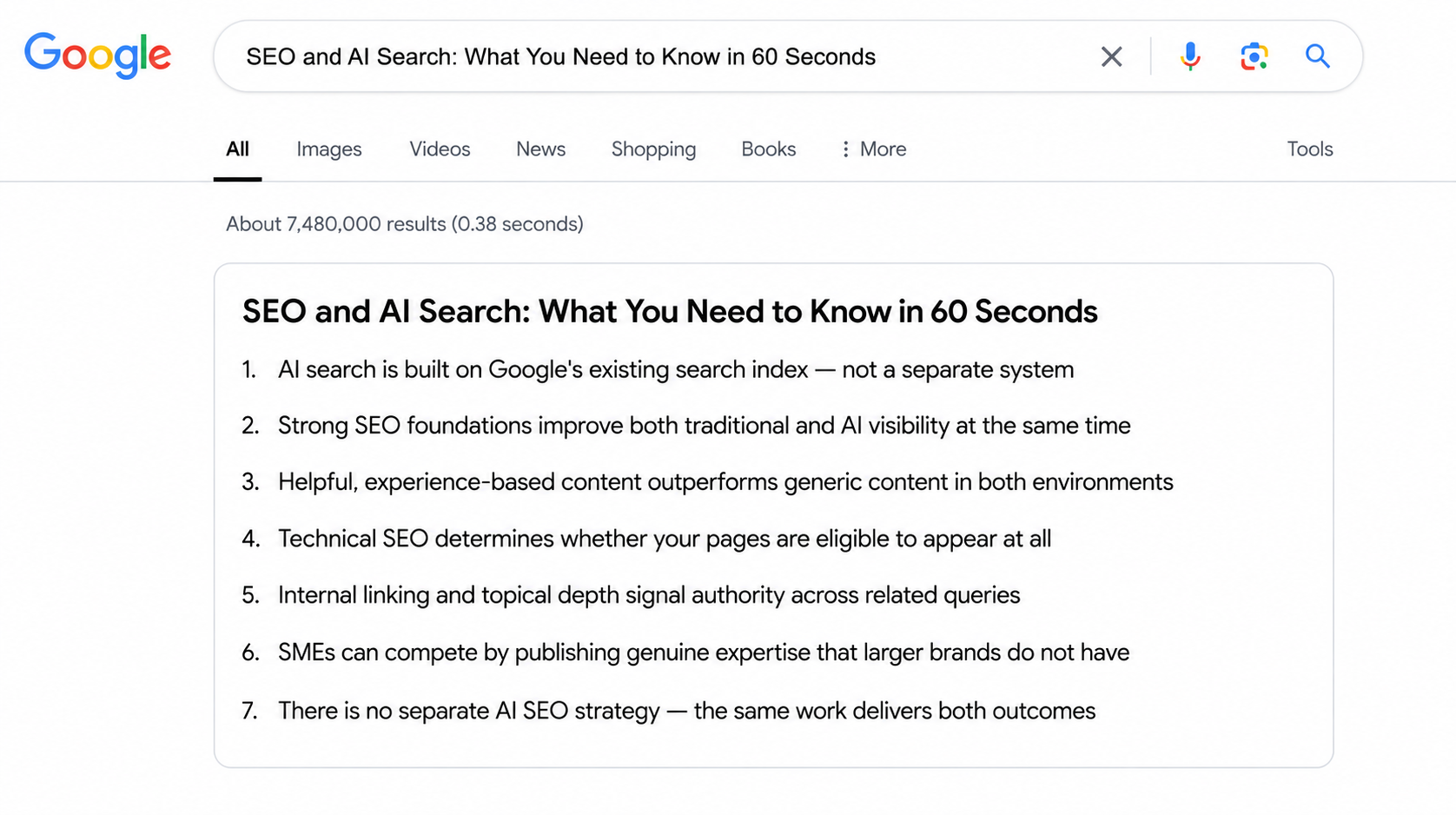
No. Google's AI features rely on the same search index and ranking systems as traditional search results. Strong SEO remains the foundation for all search visibility, including AI-generated responses.
Can small businesses appear in AI Overviews?
Yes. SMEs that publish helpful, experience-based content can appear in AI-generated search experiences. Size of business is not a ranking factor. Quality and relevance of content are.
Is SEO still worth investing in?
Yes. Strong SEO foundations improve visibility in both traditional search results and AI-powered experiences simultaneously. It is not a choice between one or the other.
Do I need a separate AI SEO strategy?
No. Google's guidance is clear that businesses should focus on high-quality SEO fundamentals rather than creating separate strategies for AI search. The same work delivers both outcomes.
What is Generative Engine Optimisation (GEO)?
Generative Engine Optimisation (GEO) is the practice of creating content that is more likely to be retrieved and cited by generative AI systems such as Google's AI Overviews, Gemini, ChatGPT, and Perplexity. It builds on standard SEO with additional emphasis on unique expertise, citable data, and authoritative sourcing.
What is Answer Engine Optimisation (AEO)?
Answer Engine Optimisation (AEO) is the practice of structuring content so that search engines and AI assistants can extract and present direct answers from it. This includes appearing in Featured Snippets, People Also Ask boxes, voice search results, and AI Overviews. It prioritises clear question-and-answer structure, concise definitions, and well-organised summaries.
Does having a meta keywords tag help SEO?
No. Google has not used the meta keywords tag as a ranking signal for many years. Time spent on meta keywords is time better spent on meta descriptions, title elements, and content quality.
Do I need an LLMS.txt file for AI search visibility?
No. Google's guidance is explicit that creating special files or markup specifically for AI systems is unnecessary. Google does not treat LLMS.txt files differently from any other content.
How long does SEO take to improve AI visibility?
Technical fixes such as crawl errors or page speed issues can have an impact within weeks. Building authority through helpful, experience-based content typically takes several months of consistent effort. Both are long-term investments, not quick wins.
How do I get my site found without an in-house SEO team?
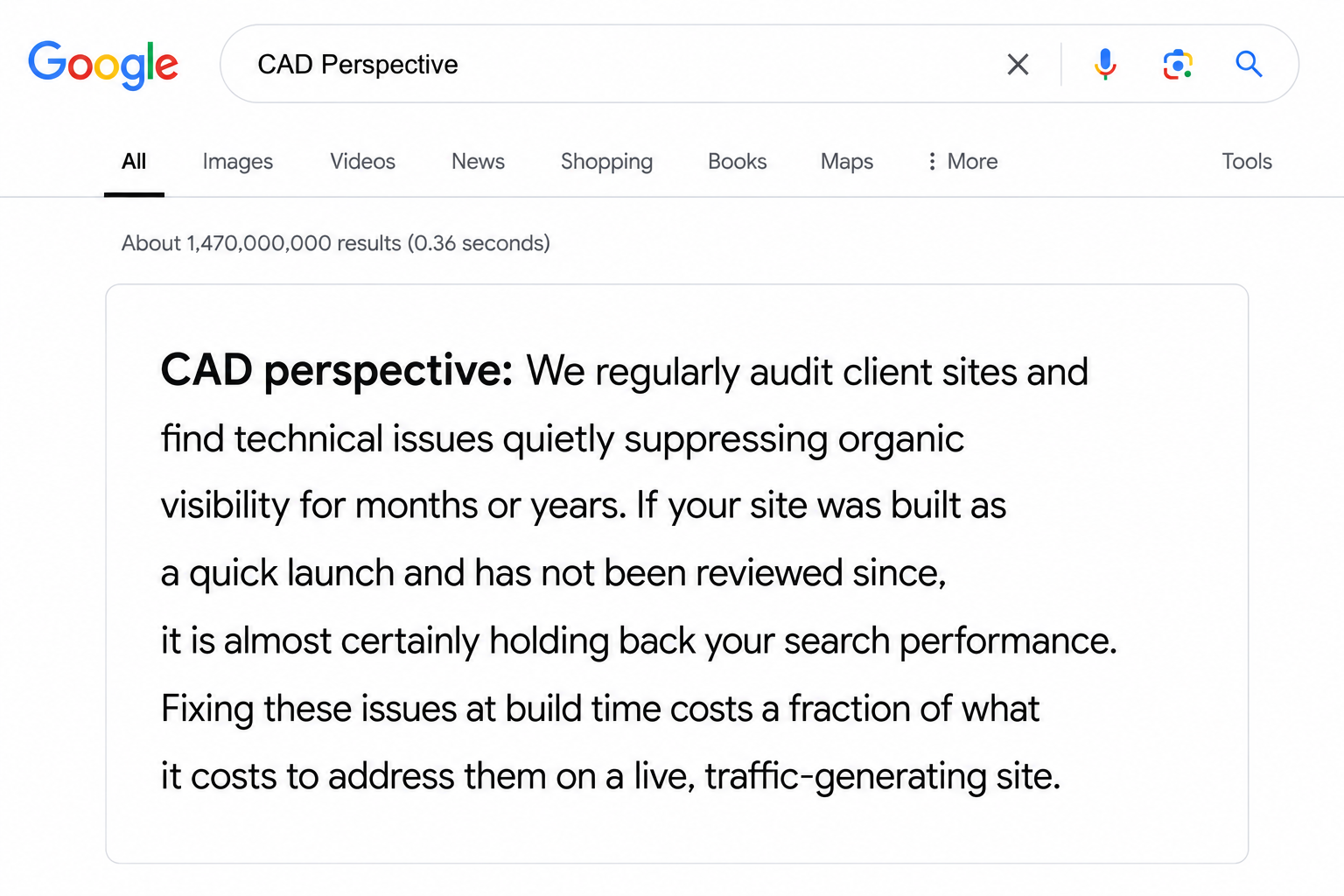
Focus on the fundamentals: a technically sound site, content that reflects your genuine expertise, and consistent internal linking. Many of the most effective SEO improvements are one-time technical fixes rather than ongoing activities. A development partner who builds sites with search performance in mind from the outset will save you significant remedial cost later.
Can a startup with a new site compete with established brands in AI search?
Yes, particularly on specific, niche topics where established brands publish only generic content. AI systems favour the most relevant and specific answer, not the most authoritative domain overall. A startup that has documented its specific approach to a problem in detail can outrank a large brand that has published only a surface-level overview.
How long does it take to see results from SEO as a startup?
For technical fixes, impact can appear within a few weeks. For new content, allow at least three to six months before drawing firm conclusions. The most important thing is to start with the right foundations rather than chasing quick wins that do not compound over time.