Key Factors That Drive Maintenance Costs
Bug Fixes and Technical Issues
No app ships perfectly. Bugs surface in the wild in ways that testing rarely predicts, and how quickly you address them has a direct impact on user retention. Simple fixes can be resolved in hours; more deeply embedded issues touching core functionality can take weeks and carry meaningful costs.
Performance Monitoring and Analytics
You can't fix what you can't see. Ongoing monitoring through tools like Firebase or similar platforms gives your team visibility into crash rates, load times, and user behaviour patterns. This data-driven approach allows you to prioritise fixes intelligently rather than reactively and the tooling itself carries a cost that should be factored into your maintenance budget.
UI/UX Updates
User expectations evolve constantly. What felt intuitive at launch can start to feel dated within 18 months. Keeping your interface fresh like being aligned with current design standards and adapted to new screen sizes and OS guidelines, is an ongoing investment that pays dividends in engagement and retention.
Hosting and Infrastructure
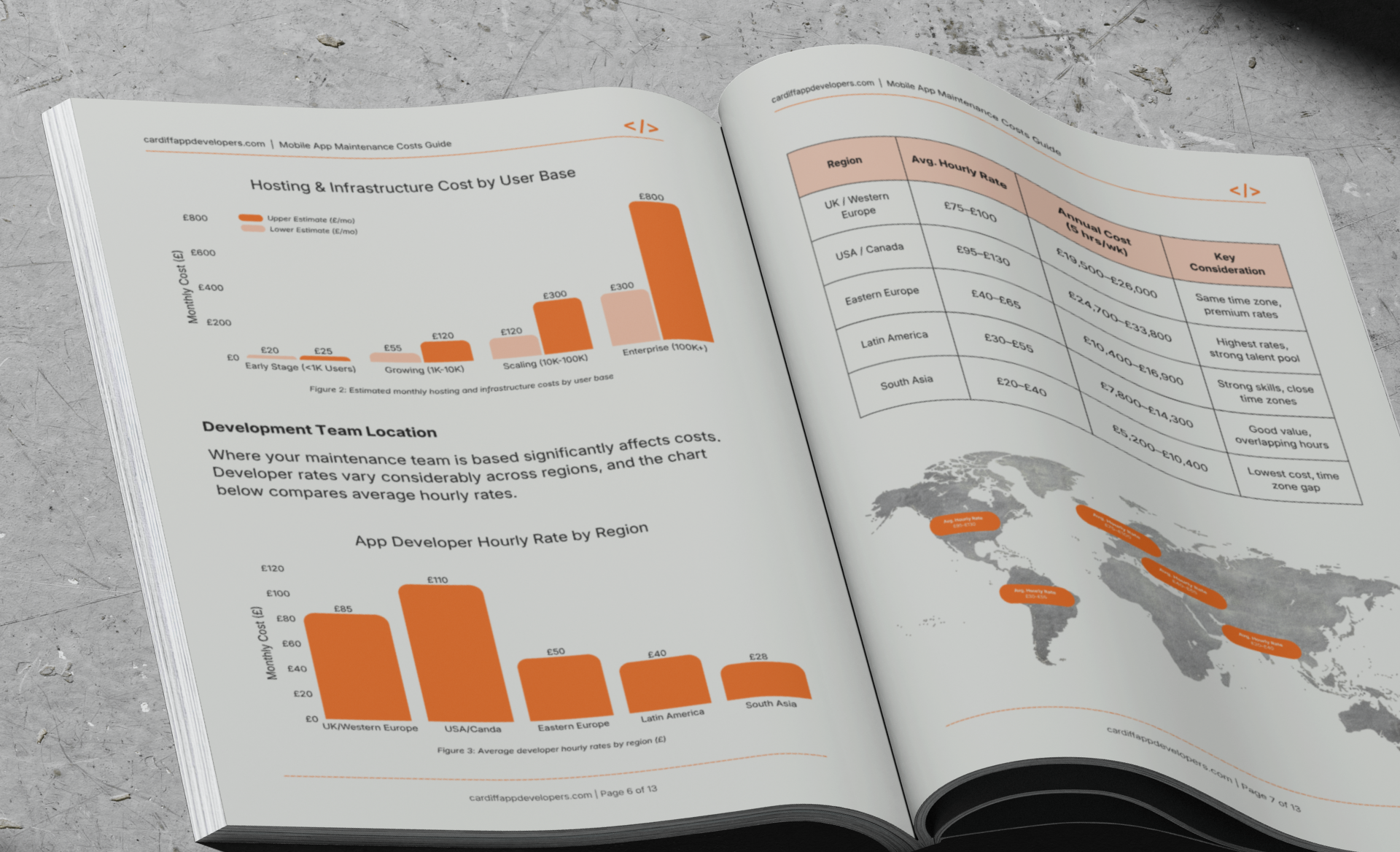
Your app lives somewhere, and that somewhere costs money. Hosting fees typically range from around £55 to £185 per month depending on your traffic volume, data storage needs, and growth trajectory. As your user base scales, so does this expense.
Development Team Location
Where your maintenance team is based significantly affects your costs. Development rates vary considerably across regions, teams based in Eastern Europe, South Asia, or Latin America often offer competitive rates compared to UK or US equivalents, with varying trade-offs in time zones and communication overhead.