Where to Start: The Right Sequence
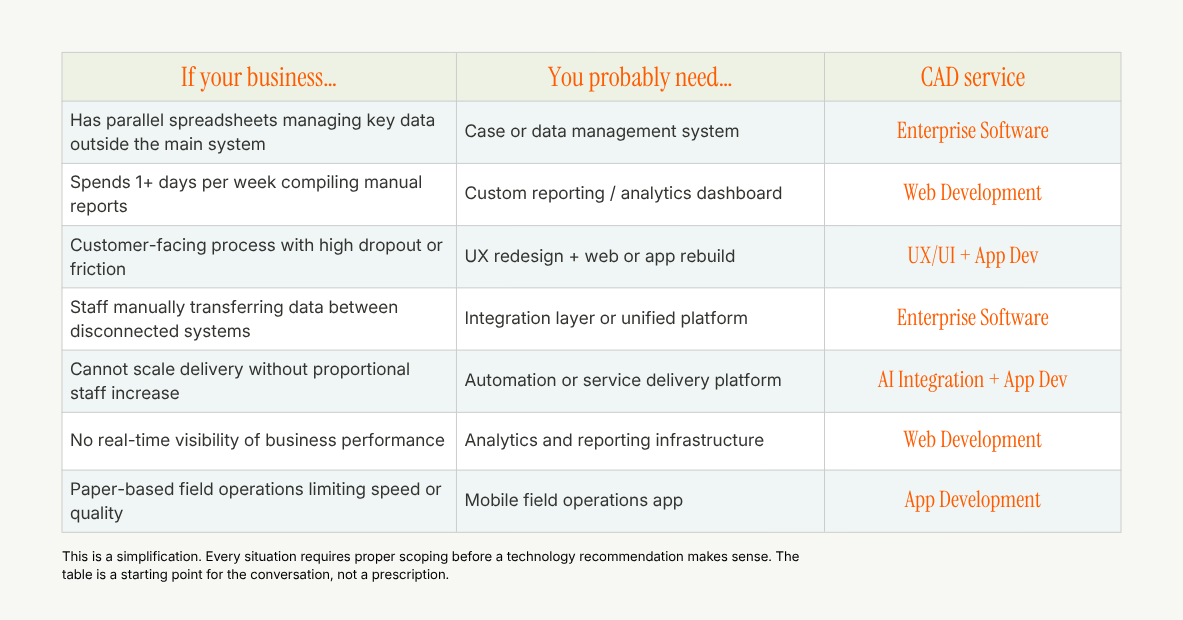
Assuming you've worked through the diagnostic and concluded that there is a genuine technology opportunity for your business and this is what the right sequence looks like.
Step one: name the problem, not the solution
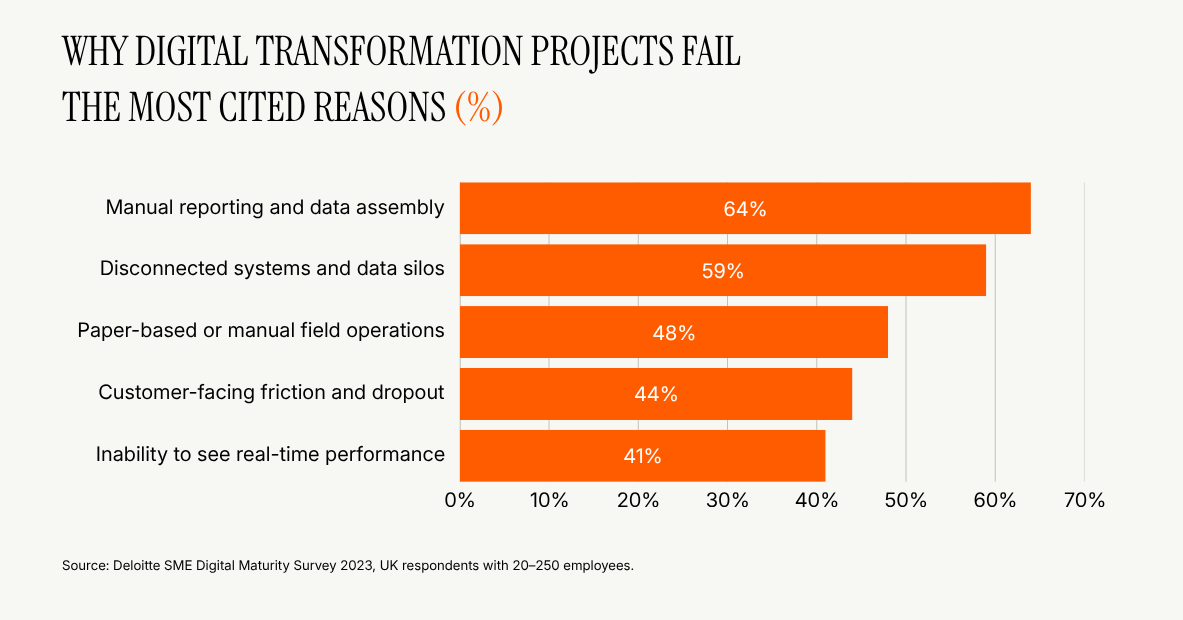
The right starting point is always a specific, costly problem. Not "we need to go digital" or "we should look at AI". What is the single most painful, most expensive, most growth-limiting process in your business right now? Write it down in a sentence. If you can't do that, you're not ready to build.
Step two: define what success looks like in numbers
Before any technology conversation, agree internally on what a successful outcome looks like and how you'll measure it. "Our reporting cycle reduces from five days to four hours." "Our customer dropout rate at checkout falls from 38% to under 20%." "Our case workers increase caseload capacity by 30% with the same headcount." These are outcome statements that make it possible to evaluate whether a technology investment is working and to hold a development partner accountable for delivering something that actually moves the needle.
Step three: get an honest external view before you spend
The free consultation and site audit offer is introduced here, framed as exactly what it is: a way to validate the internal diagnosis before committing budget. An external view from someone who has seen a lot of these situations tells you whether the problem you've identified is actually the highest-priority one, whether the technology approach you're considering is the right one, and roughly what it would cost to address it properly. That conversation should happen before any money changes hands.
Step four: start small and prove the concept
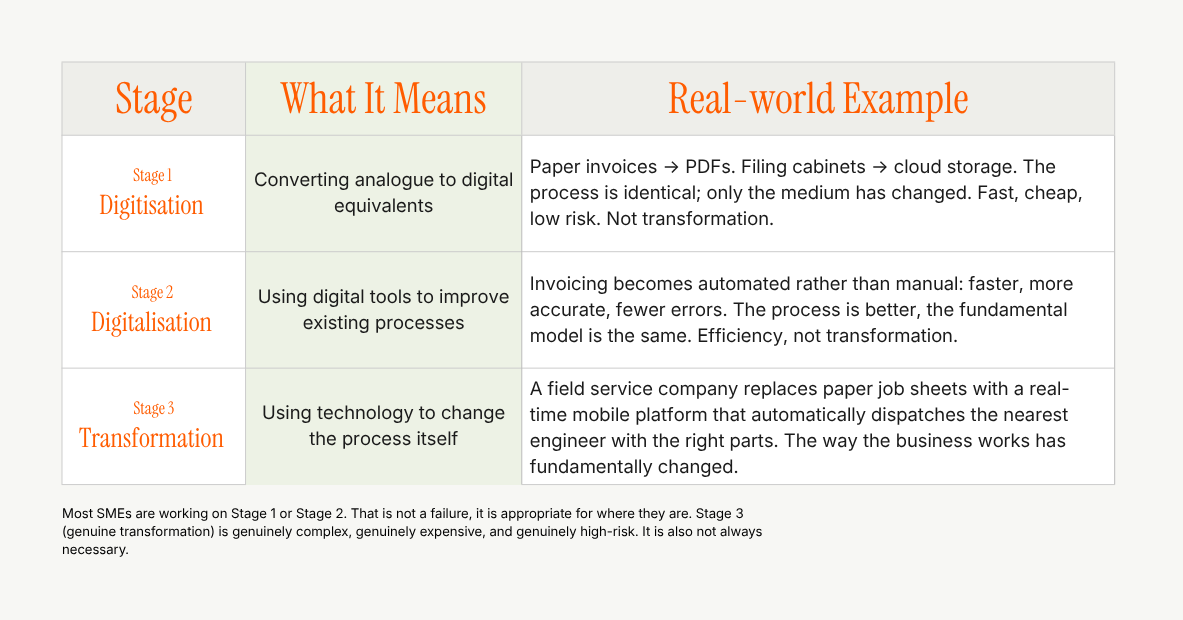
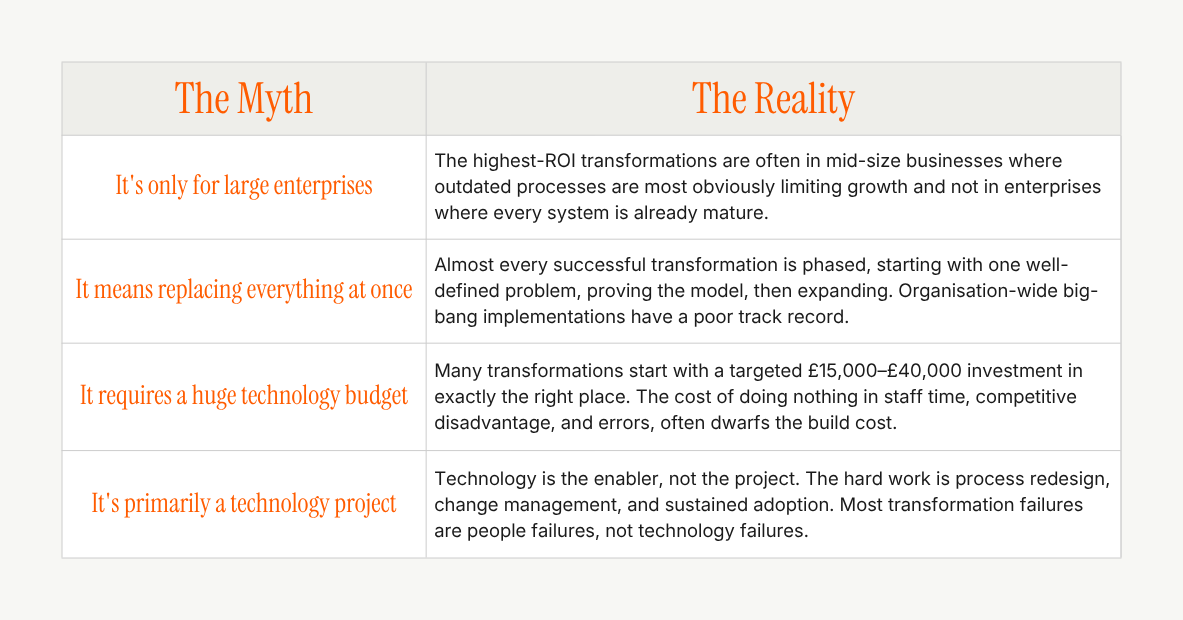
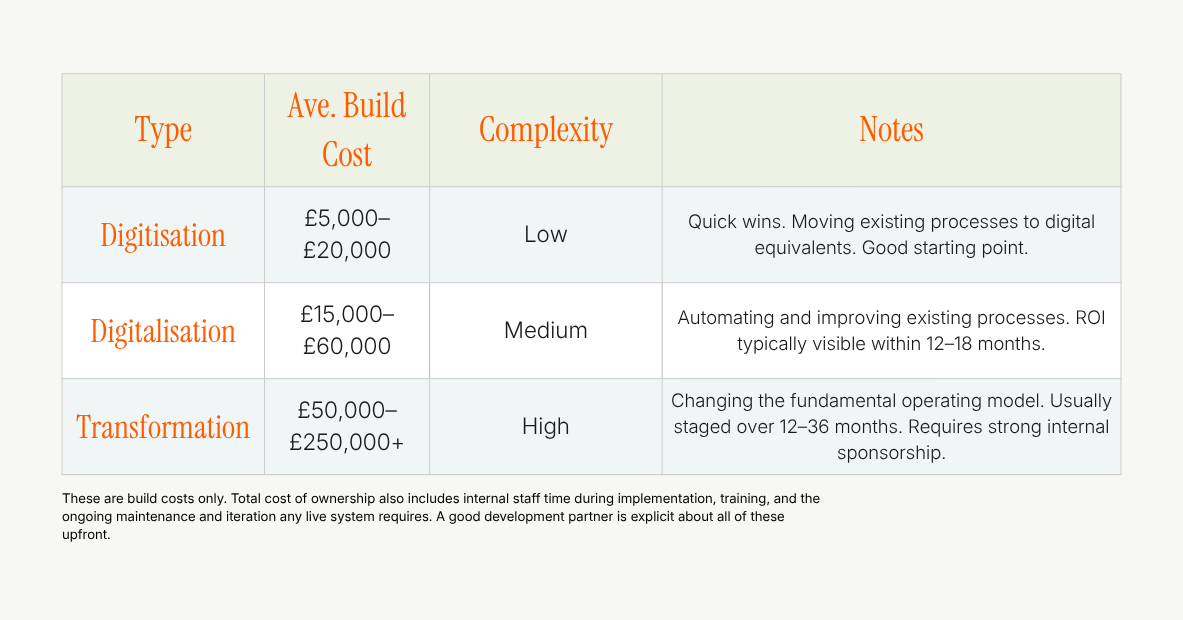
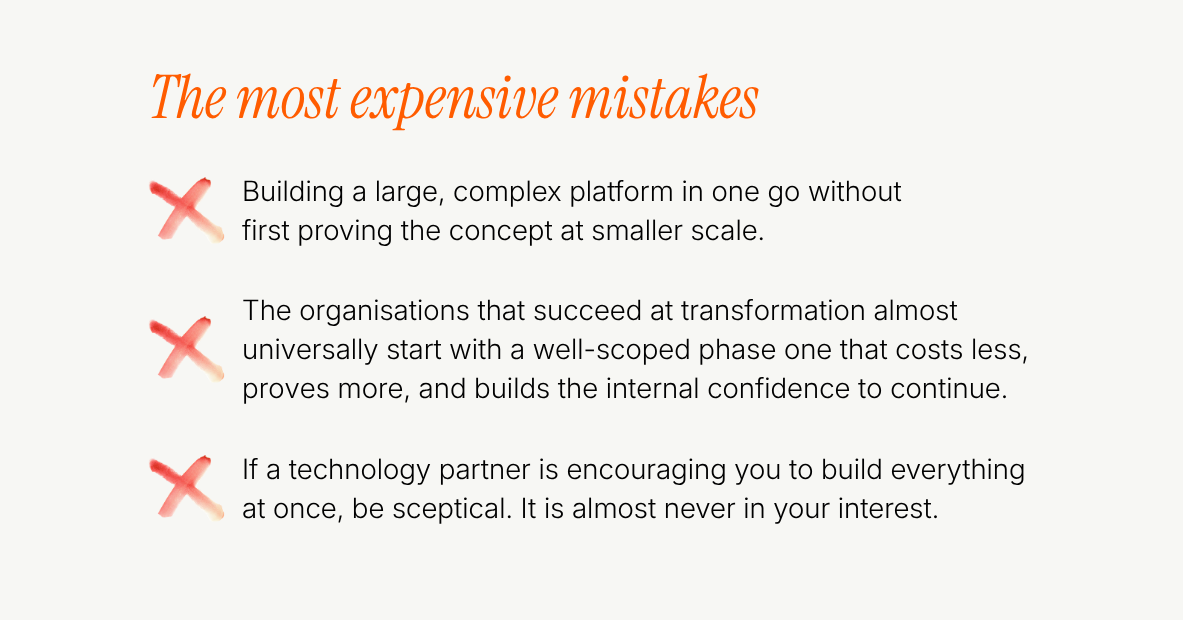
A well-scoped phase one should do three things: solve a real, specific problem; demonstrate measurable ROI within twelve months; and build the internal confidence and appetite for what comes next. It should not try to transform the whole business. The organisations that succeed at this tend to do so by proving one thing, learning from it, and then expanding. The ones that fail tend to do so by launching an organisation-wide transformation before they've demonstrated that the approach works anywhere.
Step five: invest as much in adoption as in the build
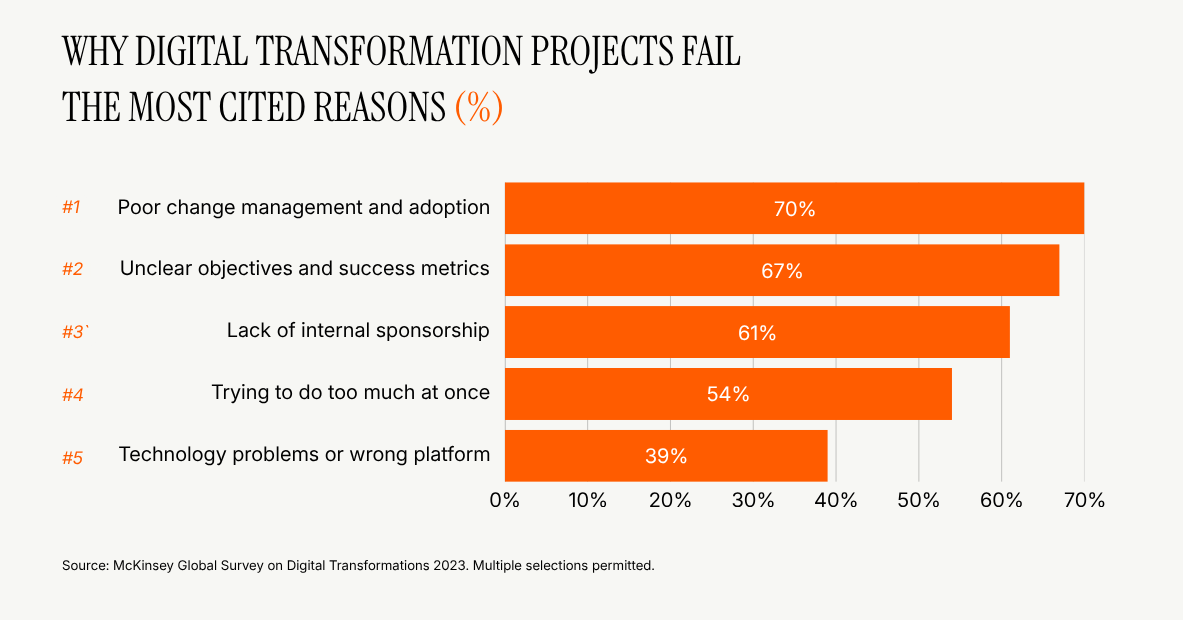
Whatever you build, plan for the reality that people resist change and that the best technology in the world fails if the team doesn't use it. Budget for training. Have a clear plan for the first ninety days after launch. Identify who will champion the new system internally and make sure they are involved throughout the build, not just presented with it at the end. Post-launch support, having the development team available and engaged in the weeks after go-live and that is not a nice-to-have. It is the difference between a system that gets embedded and one that gets quietly abandoned.